

People writing notes at a meeting table

Unlocking Leadership Potential

Designed to demystify school leadership and inspire the next generation of school leaders for middle and senior leadership roles in school as well as aspiring principals and vice-principals. Tackles the confidence gap that keeps brilliant teachers from stepping up.

Strengthening Core Leadership in Schools

Designed for emerging and aspiring school leaders, this programme creates space to step back from daily demands, think differently about leadership and build the confidence to lead with purpose, clarity and authenticity. Participants explore self-awareness, emotional intelligence, strategic thinking, prioritisation, coaching and trust through practical tools that can be applied immediately in school.

The aim is simple: to help new and aspiring leaders understand themselves, lead others well and make leadership feel purposeful, manageable and impactful.
Building Capacity, Keeping it Simple

Session 1: Unlocking Your Leadership DNA

Session 2: Emotional Intelligence, Leadership and Management

Session 3: VUCA Prime and Strategic Leadership

Session 4: Core Purpose, Core Values and Vision

Session 5: Priorities, Consistency and High-Performing Teams

Session 6: Coaching, Trust and Becoming a Better Leader

Detailed Six-Session Programme Outline

A clear progression from understanding ourselves to understanding what makes a good leader and how to acquire the skills and mindset to effectively lead and manage real school scenarios.

Session 1

Unlocking Your Leadership DNA

Participants leave with a clearer understanding of who they are as leaders, how others may experience them and the personal leadership priorities they want to develop across the programme.

  • Use self-evaluation to explore personality preferences, natural tendencies and leadership style.
  • Identify personal strengths, blind spots and areas for further development.
  • Consider the role of nature, nurture, experience and opportunity in becoming a leader.
  • Introduce emotional intelligence as a foundation for self-awareness and effective relationships.
  • Learn from others while recognising the importance of leading authentically and being yourself.
Session 2

Emotional Intelligence, Leadership and Management

Participants strengthen their awareness of their response choices and leave with a clearer understanding of how emotionally intelligent leadership balances people, purpose, processes and context.

  • Explore emotional intelligence, growth mindset and the importance of relationships in leadership.
  • Use the CBT triangle to examine how thoughts, feelings and actions influence behaviour.
  • Apply the principle that events do not determine outcomes; the leader’s response matters.
  • Distinguish leadership from authority and leadership from management.
  • Consider why leaders lead people but manage systems, processes and tasks.
  • Draw on Covey, Sinek and learning beyond education without copying another school’s approach.
Session 3

VUCA Prime and Strategic Leadership

Participants leave with a practical framework for turning uncertainty and complexity into strategic direction, focused priorities and manageable action.

  • Understand VUCA in global, educational and school contexts.
  • Use VUCA Prime to respond with vision, understanding, clarity and agility.
  • Apply ‘Start With Why’ to clarify the school’s purpose and intended impact for pupils and families.
  • Link strategic vision to priorities, planning, delegation and organisation.
  • Explore clear school development planning, effective target setting, SMART targets and one-page plans.
  • Keep planning simple, purposeful and workable rather than bureaucratic or tick-box driven.
Session 4

Core Purpose, Core Values and Vision

Participants leave able to articulate a clearer, more authentic connection between what their school believes, why it exists, where it is going and how leaders should act.

  • Clarify the distinctions and connections between core purpose, core values and vision.
  • Explore how leaders determine what their school genuinely believes and stands for.
  • Express values as active commitments that shape behaviour rather than as abstract nouns.
  • Connect the school’s ‘why’ and ‘how’ to its policies, priorities and everyday practice.
  • Challenge cut-and-paste and tick-box approaches to school development planning and policy.
Session 5

Priorities, Consistency and High-Performing Teams

Participants leave with a practical approach to prioritising high-impact work, strengthening consistency and distributing leadership through clear roles, effective delegation and team accountability.

  • Use Covey’s urgent-important matrix to distinguish necessity, proactive leadership, distraction and low-value activity.
  • Recognise that time cannot be managed; leaders can only manage what they do with the time available.
  • Gather and use data, surveys, meetings and forums purposefully when shaping school priorities.
  • Connect the school development plan to consistent classroom practice, routines and the basics that matter.
  • Explore finite and infinite-game thinking in relation to improvement, legacy and long-term success.
  • Clarify roles, delegate effectively, build high-performing teams and maintain appropriate accountability without micromanaging.
Session 6

Coaching, Trust and Becoming a Better Leader

Participants finish the programme with practical coaching behaviours, a stronger understanding of trust and accountability, and a personal plan for becoming a better leader who enables others to lead.
  • Explore the transition into leadership: lead people, manage processes and resist micromanagement.
  • Compare mentoring and coaching and identify when each approach is most useful.
  • Use the GROW model to structure coaching conversations, planning and clear next steps.
  • Practise listening so that others feel heard, using open questions rather than immediately offering solutions.
  • Build rapport and trust while agreeing actionable steps, follow-up and accountability.
  • Use coaching and PRSD to develop performance, ownership and leadership capacity.
  • Develop personal next steps for continued learning and leadership growth.

A reference you'll come back to

Complimentary for every participant

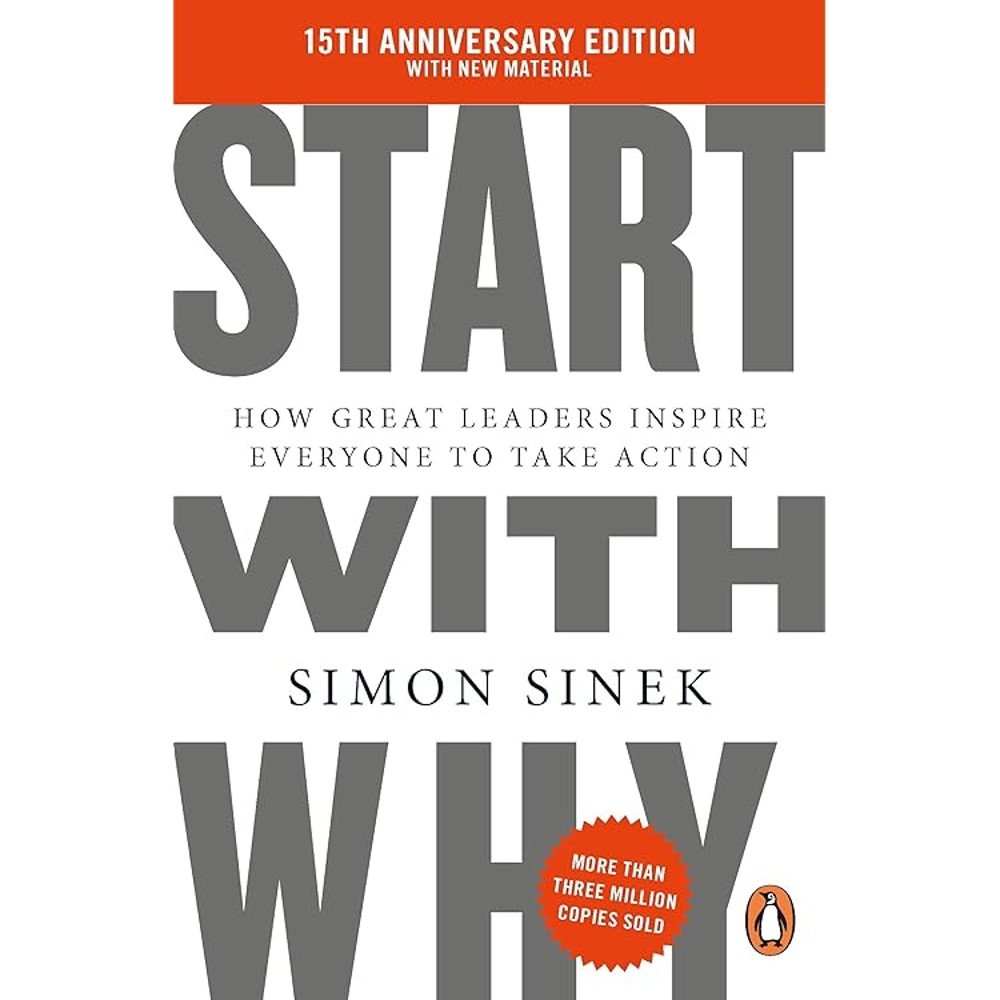
Start With Why

By Simon Sinek

“There are only two ways to influence human behaviour: you can manipulate it or you can inspire it." “People don't buy what you do; they buy why you do it. And what you do simply proves what you believe”Simon Sinek

Interested in this course?

Get in touch and we will talk you through what running this course for your school could look like.